- Your cart is empty
- Continue Shopping
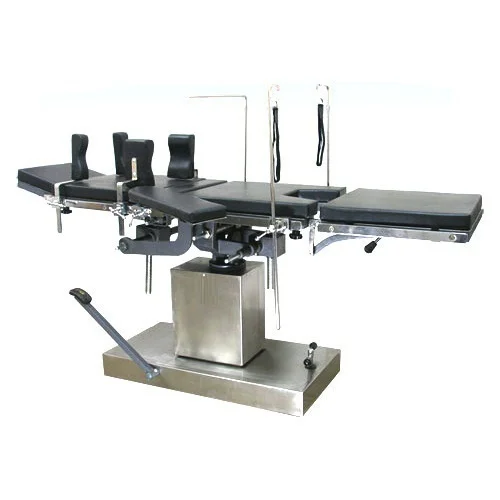
Why Choose a Hydraulic Operating Table Over an Electric Operating Table
- Hospital equipment
- Posted on
-
 by
Reginald Osita
by
Reginald Osita - 0 comments

1. Lower Acquisition Cost
Hydraulic operating tables generally cost significantly less upfront than electric tables because they do not include motors, electronic control systems, sensors, or complex wiring. For facilities with tight capital budgets, this cost difference can be decisive.
Benefit
-
Allows procurement within limited budgets
-
Frees funds for other critical OR equipment (anesthesia machines, monitors, etc.)
2. Simplicity and Durability
Hydraulic tables have fewer moving parts and no electronics. This simplicity yields advantages:
-
Less to break or fail
-
Reduced risk of electronic faults
-
Strong mechanical reliability in long-term use
Benefit
-
Less downtime from technical malfunctions
-
Longer service life in basic OR environments
3. No Dependency on Electricity
Hydraulic tables operate purely mechanically (via foot/hand pumps), so they do not require a power source.
Situations where this matters
-
Facilities with frequent power outages
-
Operating rooms without reliable backup generators
-
Rural or resource-limited settings
Benefit
-
Operability even when electrical infrastructure is unstable
4. Easier and Cheaper Maintenance
Hydraulic tables are simpler to maintain because they lack electronic control systems and motors. Maintenance usually involves:
-
Checking hydraulic fluid levels
-
Inspecting seals and pistons
-
Simple mechanical servicing by general technicians
Benefit
-
Lower ongoing maintenance costs
-
Can be serviced by general clinical engineers rather than specialized technicians
5. Robustness in Harsh or Rural Environments
In settings where:
-
Temperature varies widely
-
Dust and humidity are high
-
Technical support is distant or infrequent
Hydraulic systems are more resilient because they do not rely on sensitive electronics.
Benefit
-
Greater operational stability under adverse conditions
6. Good Adequacy for Standard Procedures
If your surgical case mix is primarily general surgery or routine procedures that do not require frequent fine adjustments or complex positioning, a hydraulic table usually meets clinical needs well.
Benefit
-
Provides all essential functions without unnecessary cost or complexity
7. No Training Burden for Electronic Controls
Electric tables require staff training to use the control panels and understand safety features. Hydraulic tables rely on simple mechanical actions — often already familiar to surgical staff.
Benefit
-
Immediate usability with minimal additional training
8. Cost-Effective for Lower Throughput ORs
In low-volume surgical units (e.g., community hospitals, primary clinics), the investment return on electric tables is limited. Hydraulic tables deliver sufficient performance without underutilized advanced features.
Benefit
-
Better cost-to-use ratio in low-demand environments
When Hydraulic is the Better Choice
You should prefer a hydraulic operating table when:
-
Budget constraints are significant
-
Electrical power is inconsistent or unreliable
-
Maintenance resources and technical support are limited
-
Your surgical workload is moderate or routine
-
You want robust, simple equipment that is easy to maintain and operate
-
You are in a rural or resource-limited healthcare setting