

Product
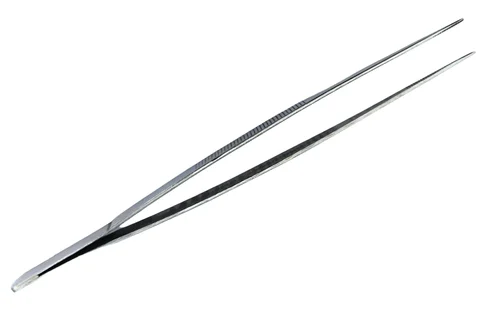
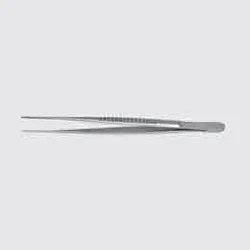
Dissecting Forceps Plain Stainless Steel 410 Grade (10” Inches)
₦5,000.00
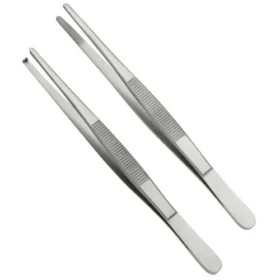
Dissecting Forceps Plain Stainless Steel 410 Grade – 10 Inches are precision surgical instruments designed for grasping, holding, separating, and manipulating tissues, vessels, specimens, and other delicate materials. Made from durable 410-grade stainless steel, these forceps are suitable for selected surgical, laboratory, research, forensic, and dissection applications and can be sterilized when processed according to the manufacturer’s instructions.
Add to cart
Buy Now
Dissecting Forceps Plain Stainless Steel 410 Grade 10 Inches are versatile medical and laboratory instruments designed to provide controlled handling of tissues and small specimens during procedures requiring precision.
The plain, non-toothed tips are designed for applications where a less aggressive grip is preferred compared with toothed forceps. Their 10-inch length provides additional reach and working distance, making them useful for procedures where deeper access or greater hand clearance is required.
Constructed from 410-grade stainless steel, these forceps offer a combination of durability, strength, and corrosion resistance when properly maintained. Where the instrument is supplied as reusable, it can be cleaned and sterilized using validated procedures appropriate for the manufacturer’s specifications.
These dissecting forceps can be used in selected applications across general surgery, laboratory research, anatomy and dissection, forensic science, microscopy, botany, and entomology.
Key Uses
1. Surgical Procedures
Dissecting forceps are used by trained healthcare professionals for controlled manipulation of tissues and structures during selected surgical procedures.
Applications may include:
- Tissue manipulation
- Tissue separation
- Vessel isolation
- Surgical exposure
- Holding delicate structures
- Assisting with suturing and tissue repair
2. Ophthalmic Procedures
Plain dissecting forceps may be used for delicate tissue handling during selected ophthalmic procedures, including procedures involving eyelid reconstruction.
The appropriate instrument should always be selected according to the specific surgical application.
3. Laboratory Research
These forceps are useful for handling and manipulating small laboratory specimens and materials.
They may be used for:
- Specimen handling
- Sample transfer
- Tissue manipulation
- Laboratory dissection
- Research procedures
- Handling fragile materials
4. Micro-Dissection
The precision design can assist with controlled manipulation of small structures during microscopic or micro-dissection work.
5. Autopsy & Forensic Applications
Dissecting forceps can be used during autopsy and forensic procedures to handle tissues, specimens, and small pieces of evidence.
6. Plant & Insect Research
The forceps can also be useful in botany and entomology for handling delicate plant structures, insects, and other small specimens.
Key Benefits
Plain Non-Toothed Tips
The plain tips provide controlled handling where a toothed grip is not required and may be preferred for delicate materials.
410 Stainless Steel Construction
410-grade stainless steel provides a durable instrument suitable for professional applications when properly maintained.
10-Inch Length
The extended 10-inch design provides greater reach and hand clearance compared with shorter dissecting forceps.
Precision Handling
The forceps allow controlled manipulation of small tissues, specimens, and materials.
Versatile Applications
Suitable for selected medical, surgical, laboratory, research, forensic, and educational applications.
Sterilizable
When supplied as a reusable instrument, it can be cleaned and sterilized according to the manufacturer’s instructions and validated healthcare-facility procedures.
Easy to Handle
The straightforward forceps design allows controlled opening and closing with the fingers, making it practical for precision work.
Features & Specifications
| Specification | Details |
|---|---|
| Product Name | Dissecting Forceps Plain Stainless Steel 410 Grade |
| Product Type | Plain Dissecting Forceps |
| Length | 10 Inches |
| Material | 410 Grade Stainless Steel |
| Tip Type | Plain / Non-Toothed |
| Function | Tissue grasping, manipulation and dissection |
| Design | Precision surgical and laboratory instrument |
| Grip Type | Plain tip for controlled handling |
| Applications | Surgical, laboratory, research, forensic and dissection |
| Ophthalmic Use | Suitable for selected delicate tissue-handling procedures |
| User Type | Healthcare professionals, laboratory personnel and trained users |
| Sterilization | Follow manufacturer’s instructions and validated protocol |
| Reusable | Yes, when supplied as a reusable instrument |
| Maintenance | Clean, inspect, sterilize and store appropriately |
| Length Category | Long |
| Condition | New |
Suitable Applications
The 10-Inch Plain Dissecting Forceps can be used in appropriately equipped:
- Hospitals
- Operating theatres
- Surgical clinics
- Ophthalmic departments
- Medical laboratories
- Research laboratories
- Anatomy laboratories
- Medical training institutions
- Forensic laboratories
- Autopsy facilities
- Botany laboratories
- Entomology laboratories
How to Use
For professional use:
- Inspect the forceps for damage, corrosion, bending, or misalignment.
- Ensure the instrument has been appropriately cleaned and sterilized before clinical use where required.
- Hold the forceps securely using the designated gripping area.
- Gently grasp the intended tissue, specimen, or material.
- Manipulate the material using controlled movements.
- Avoid excessive force that could damage delicate tissue or specimens.
- After use, follow the appropriate cleaning, disinfection, sterilization, and storage procedures.
This instrument should only be used by appropriately trained healthcare or laboratory professionals.
Important Safety Information
Plain dissecting forceps are intended for controlled handling and should be used according to the specific procedure and manufacturer’s intended application.
Do not use a damaged, corroded, bent, or malfunctioning instrument.
For reusable surgical instruments, proper cleaning, disinfection, sterilization, inspection, and maintenance are essential before subsequent use.
Why Choose 10-Inch Plain Dissecting Forceps?
The Dissecting Forceps Plain Stainless Steel 410 Grade 10 Inches offer a practical combination of precision, durability, reach, and versatility.
The plain tip design is useful when controlled manipulation is required without the aggressive grip of toothed forceps, while the 10-inch length provides additional reach for selected procedures and laboratory applications.
They are suitable for healthcare facilities, laboratories, research institutions, medical training centres, and other professional environments requiring reliable tissue and specimen-handling instruments.
Frequently Asked Questions
What are plain dissecting forceps used for?
They are used for grasping, holding, manipulating, separating, and handling tissues or specimens during appropriate surgical, laboratory, and research procedures.
What does “plain” mean on dissecting forceps?
“Plain” generally refers to non-toothed tips. They provide a different type of grip compared with toothed forceps and may be preferred for applications requiring controlled, less aggressive handling.
What size are these dissecting forceps?
These forceps are 10 inches long.
What material are they made from?
This product is specified as being made from 410-grade stainless steel.
Can they be sterilized?
If supplied as a reusable instrument, they can be sterilized using an appropriate validated method according to the manufacturer’s instructions.
Can these forceps be used in laboratories?
Yes. They can be useful for specimen handling, dissection, research, microscopy-related work, and other laboratory applications.
Are they suitable for ophthalmic procedures?
They may be used for selected ophthalmic tissue-handling applications, including certain reconstructive procedures, provided the instrument’s design is appropriate for the intended procedure.
| Forceps | Plain Dissecting Forceps, Tweezer |
|---|